
If you live in New Zealand and are planning a home in Rarotonga, Aitutaki, Fiji, Samoa or Tonga, most of the early work can happen from here. Building in the islands from a distance comes down to who does what, and when. This guide sets out the steps we handle in New Zealand, the point where freight passes to our shipping handler, and the decisions that need someone on the ground.
Yes, you can organise a build in the islands while living in New Zealand. Choosing a design, drawings, quotation and manufacture all happen here, so you can work through them with us without travelling. Assembly is done by a local builder at the destination, working to the erection drawings we supply.
What you can do from New Zealand
The first half of the project needs no travel. Tell us the island, the building type, the approximate size and where you are up to. One message is enough to start. We will ask for the rest.
- Choose a design. Pick one of our seven kitset designs, or send your own plans as PDF, JPG or PNG. If your plans are still developing, send what you have.
- Get a quotation. We review what can be framed, confirm the standard inclusions, list optional items and identify anything the quotation still needs.
- Approve the drawings. We issue manufacturing and erection drawings. Nothing is rolled until you have signed them off.
- Manufacture. Wall frames and roof framing are rolled, punched and assembled in New Zealand to the approved drawings, in the specified coating class.
- Label and pack. Every component is labelled to match the drawings, then bundled and flat-packed for transport.
If you are looking at kitset homes for Rarotonga or Aitutaki, the path is the same as for a custom design. Keep in mind what a kitset is. It is the structural steel framing package, not a finished house. Cladding, roofing, joinery, linings, insulation, services, foundations and site works are arranged separately and confirmed in the quotation.
Handing over to the shipping handler
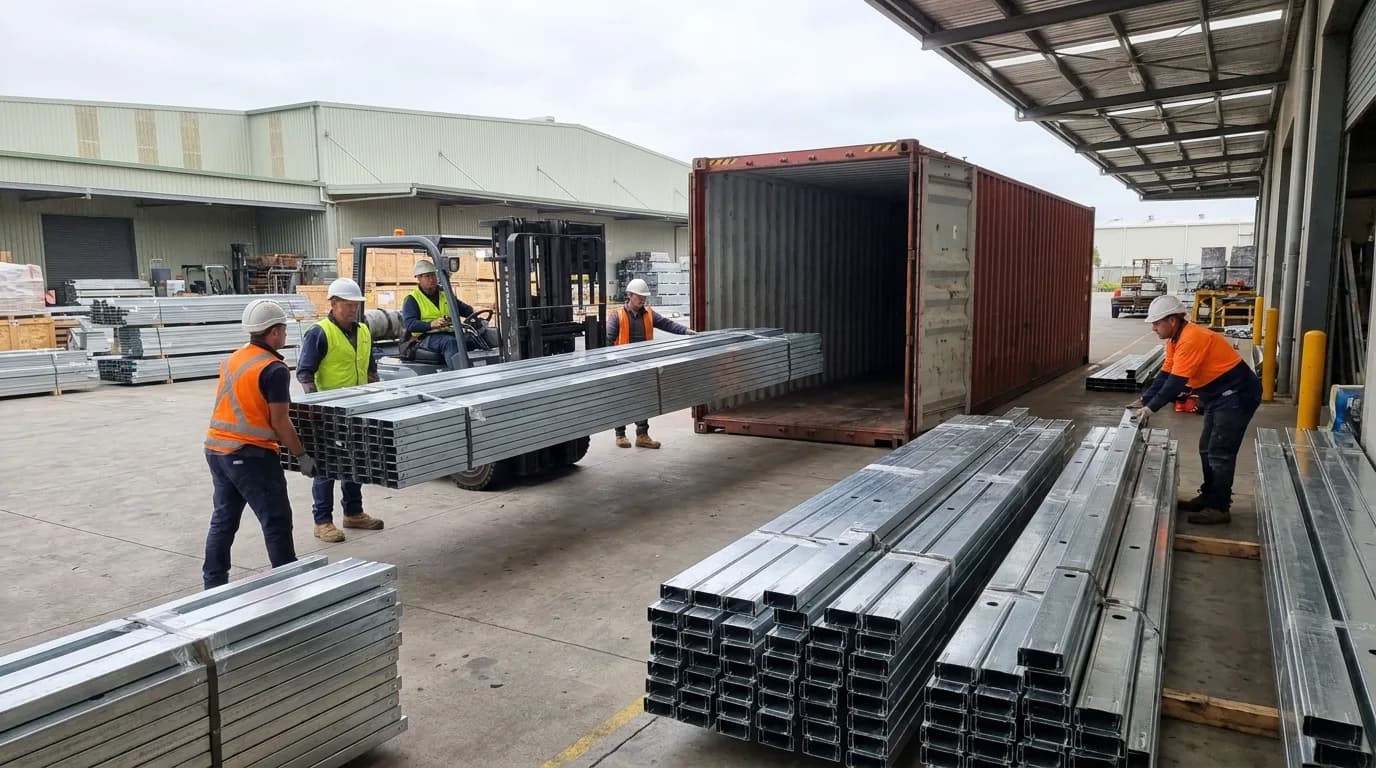
Once the frame is packed, container requirements are assessed and we hand your labelled, flat-packed frame to our own third-party shipping handler. We can put you in direct contact with them. Freight, customs and delivery are then coordinated between you and the handler.
The handler is an independent business, not an employee or agent of Pacific Steel Framing. We stay available to help if something comes up, but day-to-day freight coordination sits with you and them, which keeps us focused on manufacturing. If you already have a freight forwarder or a container coming, you can use them instead. We pack to suit and hand over at the agreed point.
We welcome enquiries from throughout the Pacific. Freight availability, container requirements and delivery costs are confirmed individually for each destination and project. Import duties, taxes and customs clearance are the responsibility of the importer unless your quotation states otherwise. We supply the commercial documentation the shipment needs.
Finding a builder in Rarotonga, Fiji, Samoa or Tonga
The standard method is assembly by a local builder at the destination, working to the erection drawings we supply. Components arrive labelled, and the frame goes together with standard power tools and screw fixing. Builders familiar with timber framing generally adapt quickly, and we can support them remotely.
Ask family, your church or people who have built recently on the same island for names. Send a shortlisted builder the erection drawings early, so they can see what is involved before they price the work. Agree who will receive the delivery, store the bundles and start assembly.
Where required, we can help coordinate independent engineers and experienced New Zealand builders. These services are quoted separately and remain subject to availability and project location. For suitable projects, that can include a New Zealand builder who may travel to the site. They are independent businesses, not our employees.
What to settle with family before you order
The frame is the part we control. The site end needs answers from you and your family before manufacture starts, because some of them are hard to sort out once a container is on the water.
- The land. Confirm where the house will go and get agreement from everyone who needs to give it, before you commit.
- Who receives the container. Name one person at the destination to deal with the shipping handler at that end and be there for unloading.
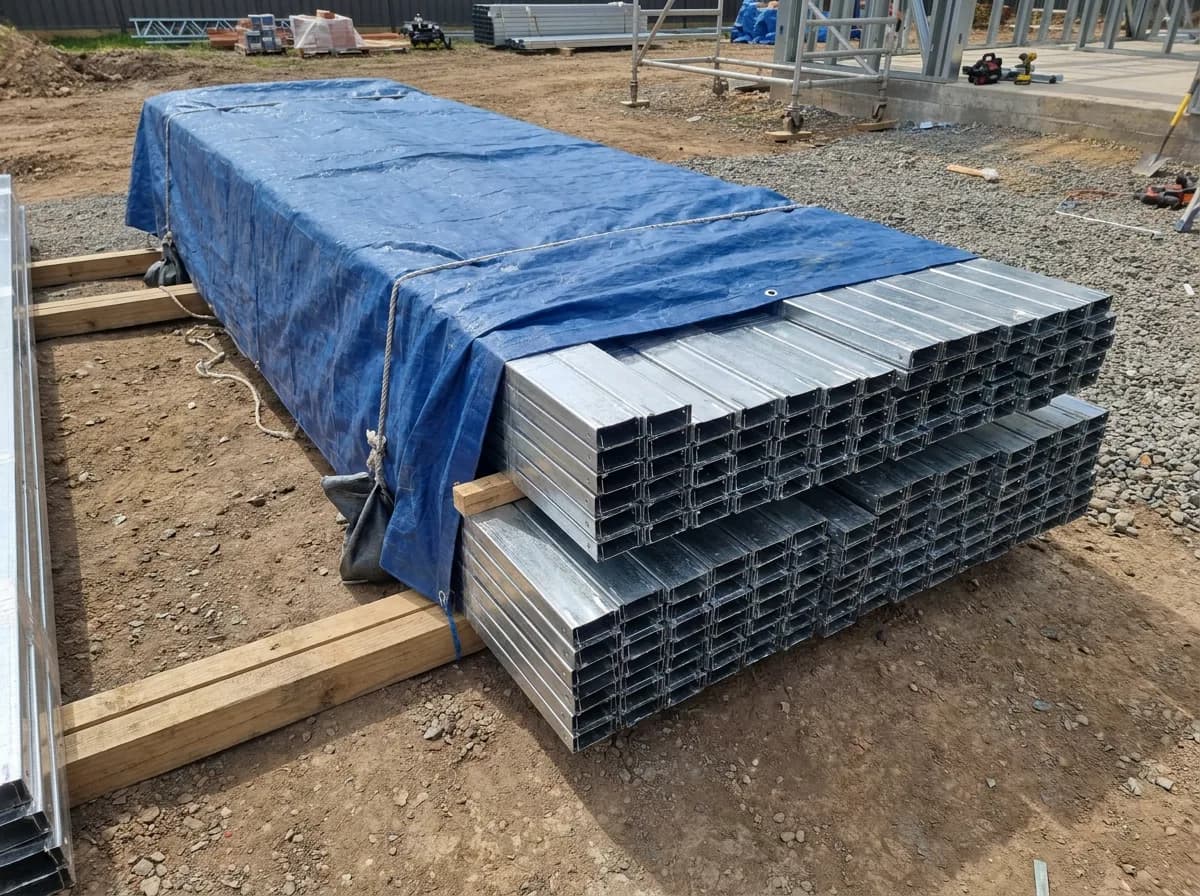
- Storage. Bundles need to sit off the ground on bearers, covered but ventilated, clear of standing water, cement dust and salt spray. Storage instructions are supplied with every shipment.
- Site access. Check that a truck can reach the site and that there is room to unload. A steep or narrow track changes how delivery works.
- Consents. Ask the local building authority what approvals your project needs. Requirements differ between countries, and they are for you and your builder to confirm.
- Foundations. The slab or foundation is designed and built by others, and it needs to be ready, square and level before the frame goes up.
Who does what, from enquiry to assembly
Write the split down and share it with family on both sides of the water. It saves a lot of phone calls later.
- We handle framing detailing and manufacture, drawings, labelled components, framing screws and connectors, and technical support on the framing package.
- Our shipping handler coordinates freight booking and sailing directly with you once introduced.
- You are responsible for the site, consents and approvals, foundations and slab, cladding, roofing, linings and services, unloading and correct storage, and appointing the local builder.
- Your local builder handles set-out and levels, assembly to the erection drawings, bracing, hold-downs and connections as specified, and workmanship on site.
If the site is exposed or near the coast, involve an engineer early. Steel framing can be designed for the project’s specific wind and cyclone requirements when supported by the appropriate site information and engineering. How the building performs also depends on foundations, hold-downs, connections, cladding, roof design and correct installation.
This article is general guidance. Structural performance, wind and cyclone design, corrosion protection and compliance depend on project-specific site information, engineering and correct installation. It does not replace advice from a qualified engineer or the requirements of your local building authority.
- Pacific Steel Framing on-site storage instructions, supplied with each shipment — reference to be added
- Pacific Steel Framing framing package inclusions schedule — reference to be added