
Most people building near the sea ask the same thing about galvanised steel framing: will salt spray corrosion get to it? The honest answer depends on the site, the specification and how the frame is handled and built in. Steel framing on coastal sites is protected by its coating, and the rest of this guide is about what keeps that coating doing its job.
Why corrosion is a specification question, not a yes or no
A frame a few streets back from a sheltered harbour and a frame on an exposed headland face very different conditions. A single yes or no cannot cover both. So the protection is specified for each site rather than assumed.
Coating class, fasteners and detailing are specified for the corrosion environment of the site. Durability also depends on protected cut edges, correct storage, correct detailing and installation quality.
The corrosion environment of your site
Steel corrodes when moisture and oxygen reach it, and salt speeds that up. How corrosive the air is at a site depends on more than distance from the beach. International standards such as ISO 9223 group atmospheres into corrosivity categories, from very low to extreme, so a specification can match protection to the conditions.
- Exposure to breaking surf and wind-blown salt spray.
- The prevailing wind, and whether it comes off the sea.
- Shelter from landforms, vegetation or other buildings.
- Humidity, and how long surfaces stay wet.
- Whether rain washes salt off a surface or leaves it to build up in sheltered spots.
Assessing the corrosion environment, and the coating class it calls for, is the job of the project engineer or specifier. We do not publish which category a place falls into or how far from the sea a category starts. Those depend on the site, and the engineer and local guidance decide them.
Coating class and compatible fasteners
Galvanised steel framing is rolled from steel coil that already carries a metallic coating. The coating class describes the type and amount of that coating. A more demanding environment calls for more protection, so the coating class is part of the specification and part of the price. We roll the frame in the coating class that has been specified.
Fasteners matter as much as the frame. A screw that corrodes faster than the steel around it becomes the weak point. Fasteners need to suit both the coating and the corrosion environment. Where other metals touch the frame, such as pipes, brackets or flashings, the detail should keep dissimilar metals apart unless they are confirmed as compatible.
Cut edges and penetrations
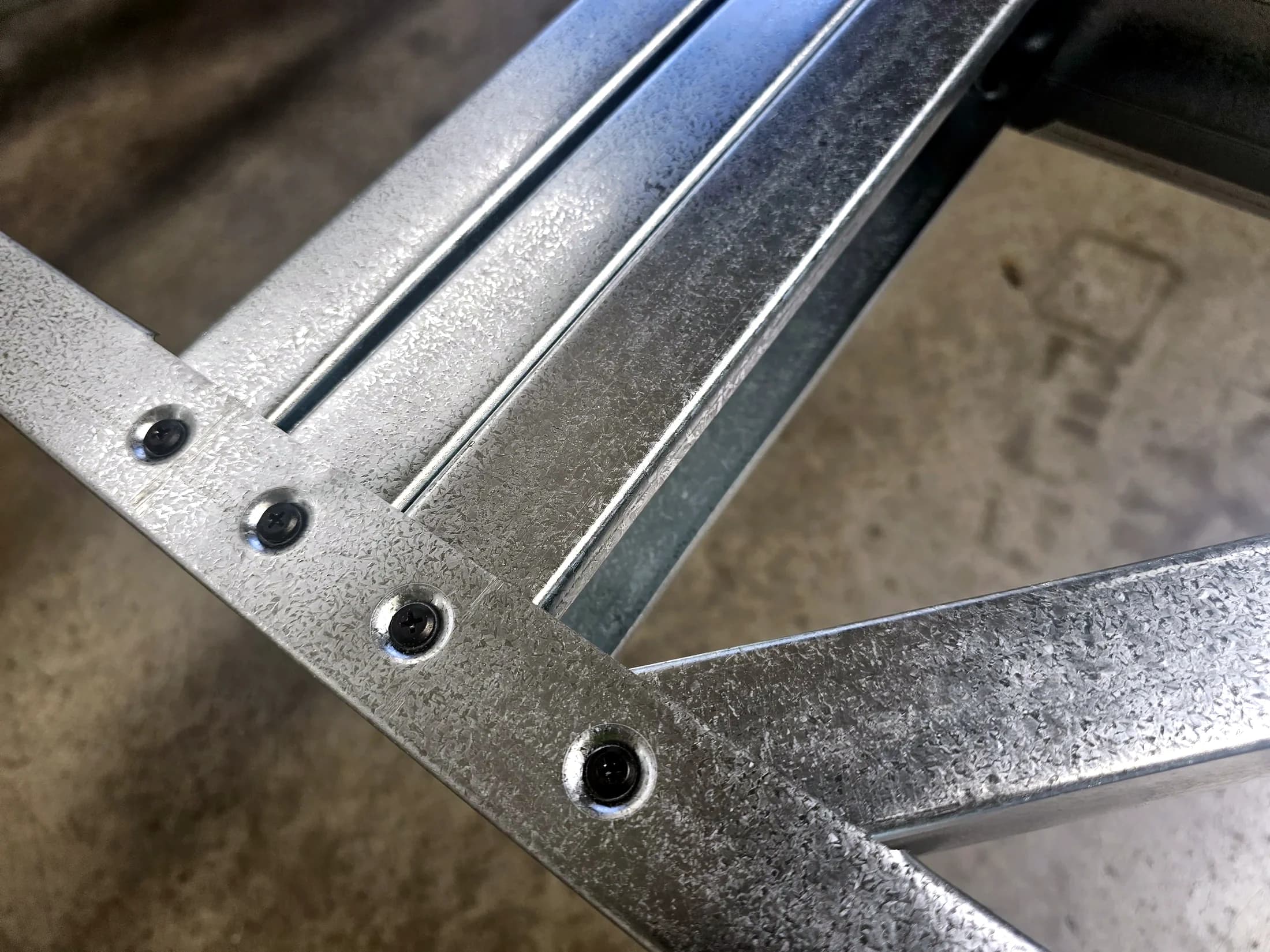
Anywhere the coating is cut, drilled or scratched, the steel underneath is more exposed. Components arrive cut to length and labelled, so there is very little cutting on site. That keeps the number of fresh edges down, but it does not remove them.
- Treat any on-site cuts, drill holes and coating damage as the specification requires.
- Studs are pre-punched for services and supplied with grommets. Fit the grommets before cables are pulled.
- Do not cut extra holes in studs without structural review. A new hole is both a structural question and a fresh edge.
- Sweep up drilling swarf and offcuts so they do not rust against coated surfaces.
Storage before assembly
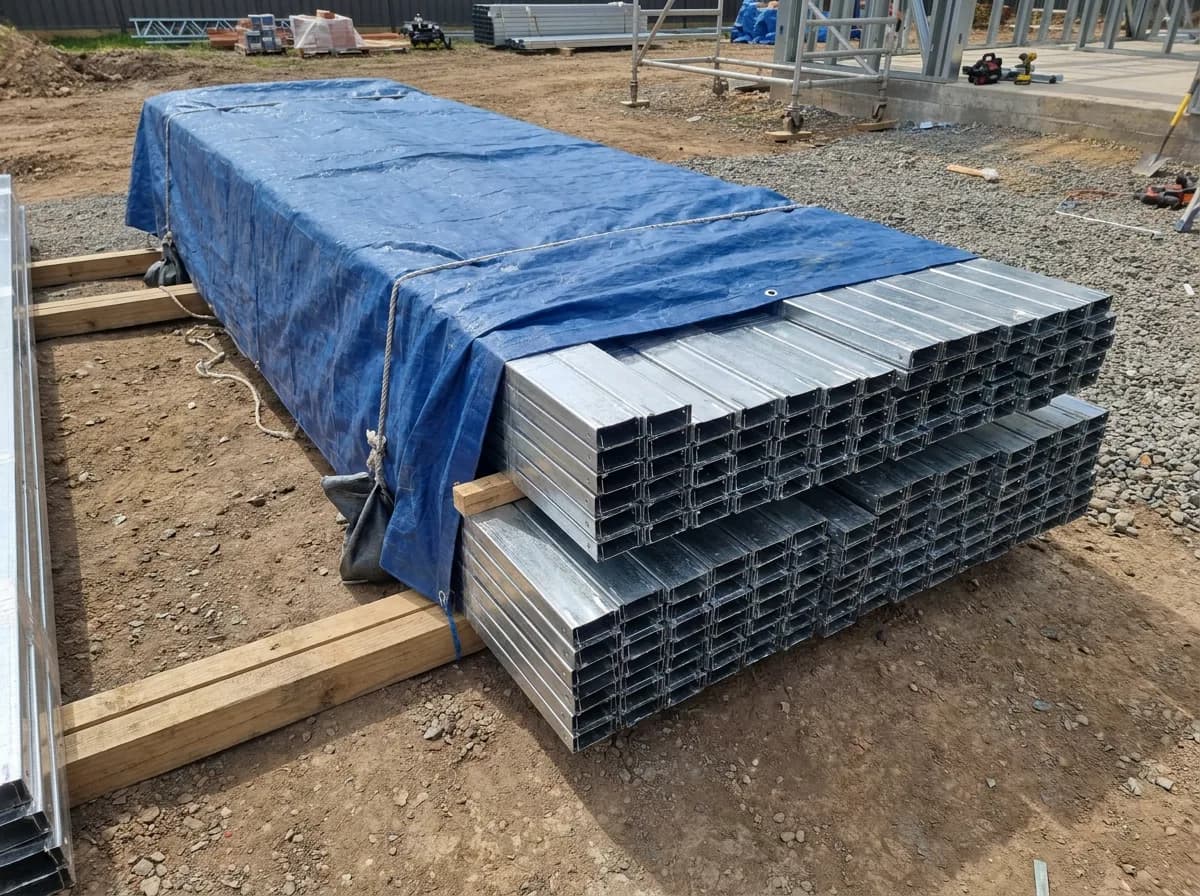
The frame may sit on site for a while before your builder is ready. How it is stored in that time affects the coating. Storage instructions are supplied with every shipment. The basics:
- Off the ground on bearers.
- Covered but ventilated, so moisture can dry off rather than sit trapped against the steel.
- Clear of standing water.
- Away from cement dust.
- Out of salt spray.
Detailing and installation keep steel framing dry on coastal sites
Inside a well-detailed building envelope, the frame is kept away from rain and spray. That envelope is cladding, roofing, flashings and joinery, which are arranged separately by you or your builder. Their detailing decides how much moisture ever reaches the frame, so it needs the same care as the frame itself.
- Flashings and cladding junctions that shed water away from the frame.
- A foundation interface that keeps the bottom plate clear of ponding water.
- Ventilation of roof spaces and wall cavities as the design requires.
- Clean handling, so the coating arrives at the wall undamaged.
Durability depends on the appropriate steel coating, the corrosion environment, correct fasteners, protected cut edges, correct storage, correct detailing and installation quality.
Installation quality is the last link. Your local builder works to the erection drawings, fits the specified fasteners and treats any damage as it happens. Coastal buildings also need ongoing care of the cladding and roofing, so ask those suppliers what they recommend for your site.
This article is general guidance. Structural performance, wind and cyclone design, corrosion protection and compliance depend on project-specific site information, engineering and correct installation. It does not replace advice from a qualified engineer or the requirements of your local building authority.
- ISO 9223 Corrosion of metals and alloys — Corrosivity of atmospheres — Classification, determination and estimation
- AS/NZS 2312.2 Guide to the protection of structural steel against atmospheric corrosion by the use of protective coatings, Part 2: Hot dip galvanizing
- AS 1397 Continuous hot-dip metallic coated steel sheet and strip — Coatings of zinc and zinc alloyed with aluminium and magnesium